contact@fourtheon.bio
+1 910-294-0458

Research

Adaptive biosecurity infrastructure

Fourth Eon is a research and development organization exploring the capabilities, applications, and risks of AI bio models to advance global biosecurity and build adaptive safeguards.

Programs

One active program, three in scoping

SCREEN is our active research, development, and deployment program. SHIELD has completed scoping, and three more programs are open for funded scoping proposals through our request for proposals. Select a program for more detail.

Active RD&D program

Active program

SCREENFunction-based synthesis screening

Developing, testing and deploying function-based screening for nucleic acid and protein synthesis. Measuring and adapting AI model capabilities for predicting molecular properties from sequence to identify hazardous functions.

  • Evaluating AI protein design methods for generating highly divergent functional protein variants
  • Developing methods to map the architecture and components of an unknown sequence
  • Identifying functional signatures of hazardous protein families based on conserved molecular features
  • Mapping structural neighborhoods of dangerous proteins to calibrate structure-based detection
  • Evaluating sequence-to-function prediction on distant AI-designed protein variants
  • Identifying novel hazards by predicting protein-protein interactions with known host targets
  • Exploring model representations and interpretability for recognizing hazardous functions

Why function-based screening
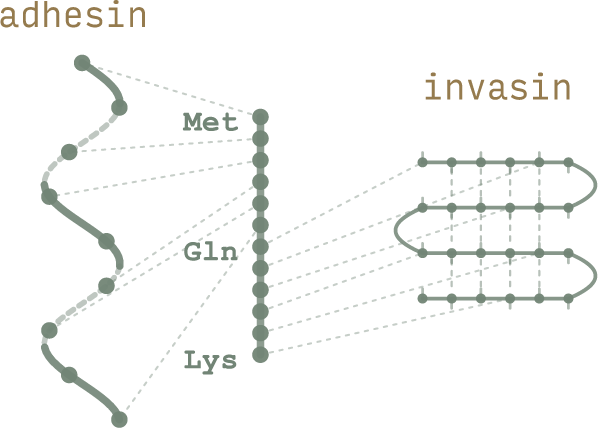
DNA synthesis screening is central to detecting hazardous biological function before it’s built. DNA sequences encode a highly compressed representation of biological function, which is executed by the cellular environment through the processes of molecular biology. Screening sequences for hazardous functions has traditionally relied on homology to known genes and proteins, but this approach is being strained as synthetic biology pushes beyond the space explored by nature.

Biological foundation models can learn a rich and nuanced representation of biomolecules by mapping their sequence–structure–function relationships to a high-dimensional embedding space. Fourth Eon is evaluating foundation model capabilities for predicting structure, binding, function, and other molecular properties directly from sequence, and exploring how this could be used for detecting biological threats that do not closely resemble anything found in nature.

AI protein design risk
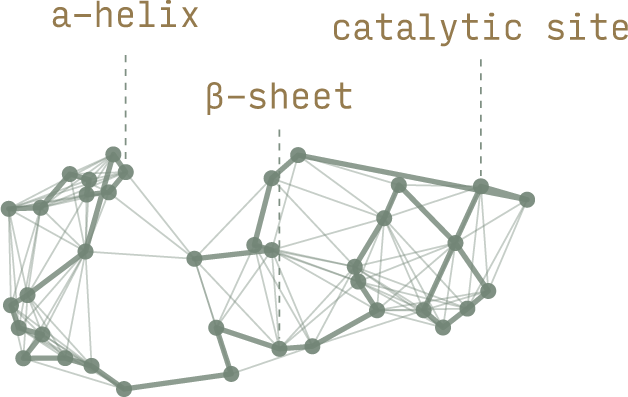
Biological foundation models and biodesign tools are transforming our ability to create novel proteins and pushing the boundaries of synthetic biology. They also pose new challenges for biosecurity due to the potential for engineering dangerous functions.

Fourth Eon is evaluating AI-enabled protein design in the context of biosecurity screening, and seeking to understand the capabilities of current models in generating novel proteins that could challenge existing safeguards.


Future RD&D programs

Scoping completed

Scoping completed

SHIELDCloud labs & autonomous platforms

Protocol-level biohazard detection for cloud labs and autonomous experimental platforms.

The problem

Cloud labs and automated biofoundries run experiments from submitted protocols, increasingly designed or executed by AI agents, with little human review at the bench. Screening the sequences a lab orders does not show what an experiment will do with them.

Scoping

Scoping research examined how biosecurity screening could work in cloud labs and automated biofoundries, at the level of the protocols and workflows they execute as well as the sequences they use.

Open for funded scoping proposals

RFP open

INTERLOCKSynthesis hardware

Hardware and firmware-level security for benchtop nucleic acid synthesis devices.

RFP open for funded scoping proposals

What are robust and practical security measures for benchtop synthesis devices that meet the requirements of both manufacturers and end-users?

Benchtop synthesis devices give laboratories more control over synthesis and shorten the time from design to testing. They also pose a biosecurity challenge because instrument design, deployment settings, users, and operating practices all differ. Security has to work reliably in everyday use and across a device’s working life, with minimal friction for legitimate research, and should hold up against a user with physical possession of the device, the ability to run it offline, and time.

Areas to explore

Landscape
The device landscape, manufacturers, installed base, existing protections, and a priority use case where Fourth Eon could contribute most.
Technical approach
How sequence and customer screening could work with device and user controls across software, firmware, hardware, and consumables, including contributions from SCREEN.
Partners
Input from engineers, manufacturers, end-users, and screening providers on integration, cost, updates and support, and interest in a pilot.

Scoping award

Up to $75,000 for three months of scoping and program development, as an individual Program Architect or a two-person team.

RFP open

SAFEGUARDAI safeguards

Function-based biosecurity constraints for biological AI models, LLMs, and agents.

RFP open for funded scoping proposals

Which AI safeguards meaningfully reduce biological risk, and what would drive adoption by developers and researchers?

General-purpose AI, specialist biological models, and tool-using agents are changing how life sciences research is designed and carried out. Approaches range from safeguards trained into model weights to inference-time filters, access checks, watermarking, and provenance. Many biological models are released openly, where safeguards can be exposed and tampered with, so we are especially interested in approaches that stay robust under those conditions.

Areas to explore

Landscape
The approaches being proposed and tested, a consequential first intervention, and gaps in existing protections.
Technical approach
Promising safeguards, where SCREEN could add value, and how robustness and effects on legitimate research could be evaluated safely.
Partners
AI safety researchers, model developers, and laboratory partners: requirements, adoption incentives, and interest in a pilot.

Scoping award

Up to $75,000 for three months of scoping and program development, as an individual Program Architect or a two-person team.

RFP open

THRESHOLDCapability evaluation

Biosecurity capability evaluations and benchmarks for biological AI models.

RFP open for funded scoping proposals

What evidence about biological AI model capabilities would improve decisions on model release, access, safeguards, and oversight, and how can it be collected reliably?

Benchmark results from model developers do not by themselves establish practical biosecurity risk; that depends on how genomic, RNA, protein, and cellular models are accessed and used, including through agents. In-silico performance does not translate cleanly into real-world capability, and the experiments that establish the link are slow, expensive, and potentially hazardous. We want evaluations tied to specific decisions, and to learn how far a rigorous program can get without wet-lab testing.

Areas to explore

Landscape
What is already evaluated and by whom, then a model class, capability axes, and the decisions better evidence could change.
Evaluation approach
Measures and baselines, how to validate them safely, limits on interpretation, and the access, data, and expertise required.
Partners
Model developers, laboratories, researchers, and policymakers, with independent methods and review.

Scoping award

Up to $75,000 for three months of scoping and program development, as an individual Program Architect or a two-person team.